Organic Integration & Structural Expressionism
The mid-20th century was defined by an ongoing rebellion against sterile, rectilinear functionalism. Frank Lloyd Wright pioneered Organic Architecture, arguing that buildings should not merely occupy nature, but grow from their immediate geological setting. In Fallingwater (1939), this ethos materialized via daring cantilevered reinforced concrete trays that thrust outward over rushing water, eliminating conventional post-and-lintel framing.
By the 1960s, Ove Arup and Jørn Utzon expanded these spatial horizons at the Sydney Opera House. Rather than treating concrete as planar slabs, Utzon employed structural expressionism through cast self-supporting ribs. The pivotal engineering breakthrough—deriving every single vaulted shell from the common surface geometry of one single sphere—proved that mathematical discipline could tame even the most audacious artistic ambitions.
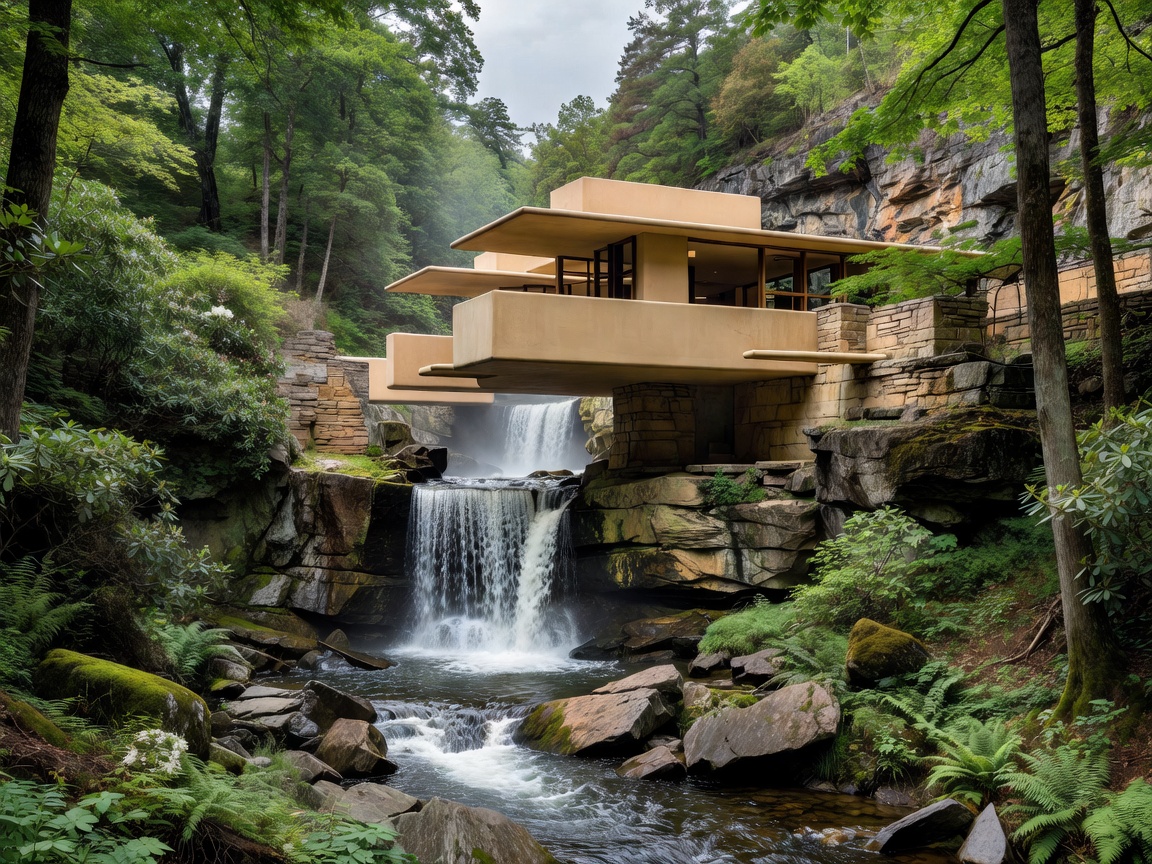
CASE STUDY 1A: Fallingwater Organic Cantilever System (1939)
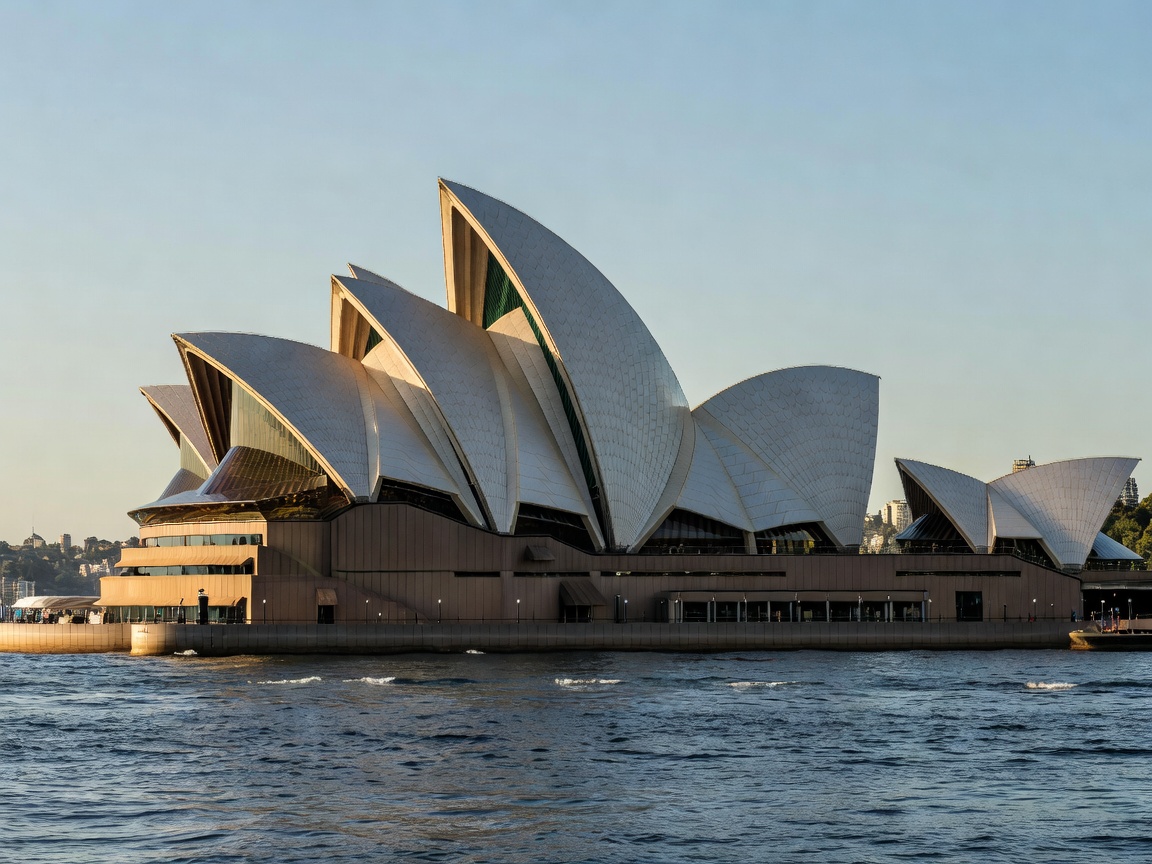
CASE STUDY 1B: Sydney Opera House Spherical Precast Shells (1973)
Key Case Studies
Fallingwater (USA), Sydney Opera House (Australia).
Material Drivers
High-tensile rebar, cast-in-place concrete, post-tensioned tendon cables.
Deconstructivism & Aerospace Computational Modeling
Sparked by philosophers Jacques Derrida and the 1988 MoMA exhibition curated by Philip Johnson, Deconstructivism shattered the dogma of symmetry, right angles, and structural predictability. Building elements appeared fractured, distorted, and in permanent kinetic tension.
Frank Gehry demonstrated with the Guggenheim Museum Bilbao (1997) that Deconstructivist geometry was structurally constructible at scale, utilizing Dassault Systèmes’ CATIA aerospace software to calculate structural steel tolerances and 0.38-millimeter titanium skin sheets. Herzog & de Meuron continued this discourse at the Elbphilharmonie Hamburg by dropping an undulating, wave-sculpted glass superstructure straight onto a monolithic brick dockside storehouse.
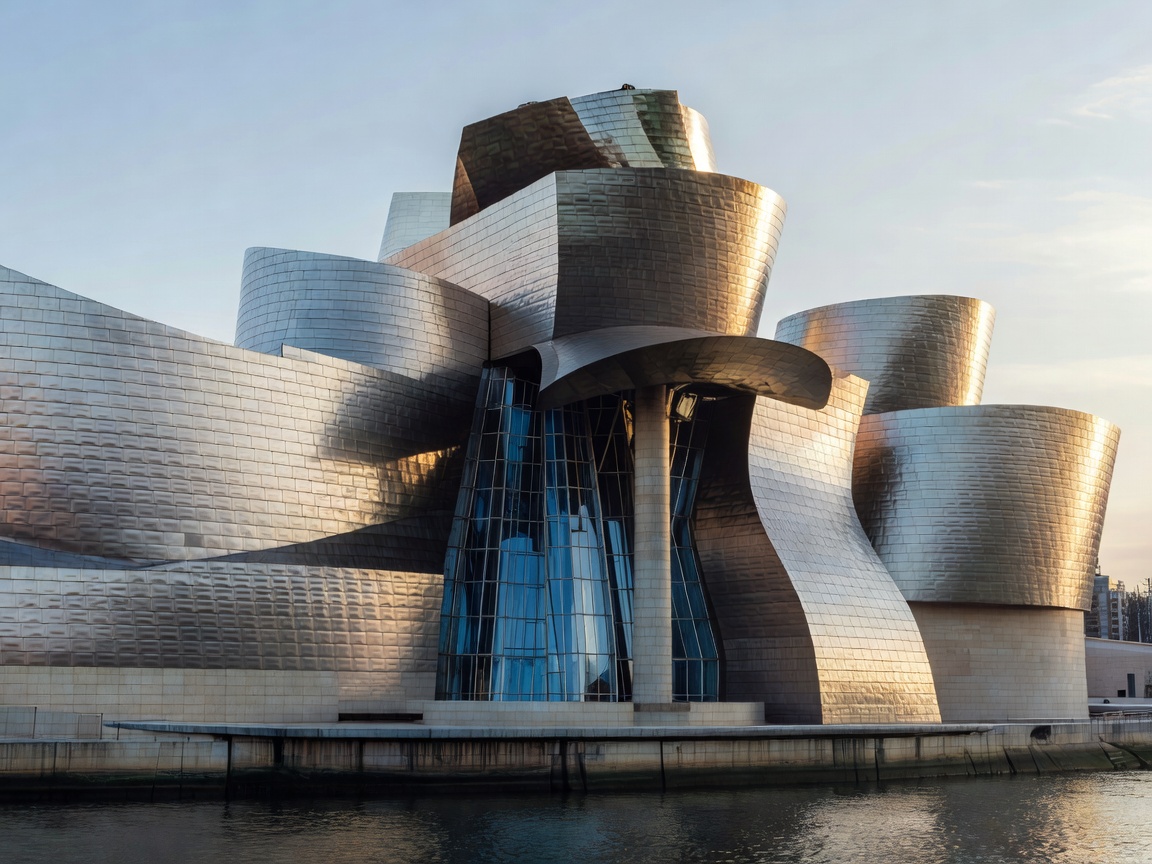
CASE STUDY 2A: Guggenheim Bilbao Quenched Titanium Skin (1997)
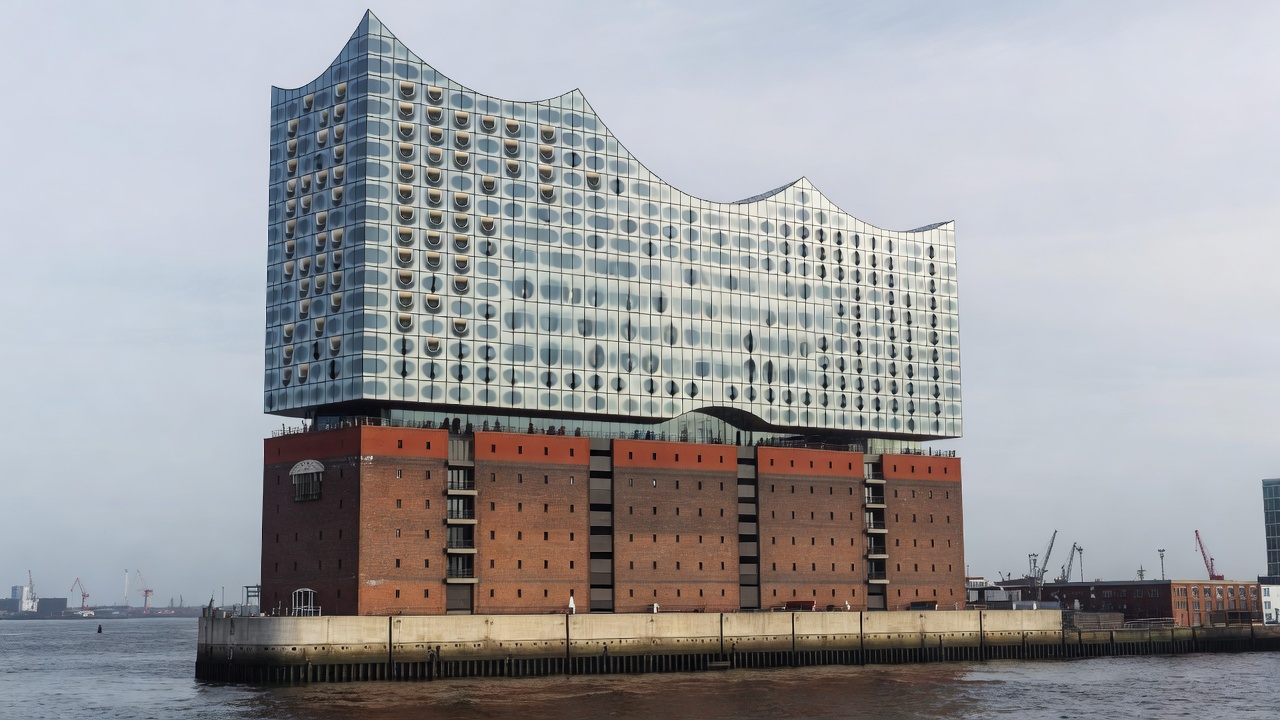
CASE STUDY 2B: Elbphilharmonie HafenCity Glass Wave Facade (2016)
Key Case Studies
Guggenheim Bilbao (Spain), Elbphilharmonie (Germany).
Material Drivers
Titanium sheeting, curved thermoformed glass, algorithmic 3D surface modeling.
The Buttressed Core & Megatall Megastructures
Prior to the 21st century, skyscrapers were constrained by the 'tube-in-tube' system invented by Fazlur Khan. While effective up to roughly 500 meters, structures exceeding 600 meters encounter exponential lateral wind vortex shedding.
Adrian Smith and structural engineer Bill Baker at SOM developed the Buttressed Core for the 828-meter Burj Khalifa in Dubai. Comprising a hexagonal central hub surrounded by three wings that step back at staggered heights, this structural paradigm 'confuses the wind' by preventing coordinated low-pressure vortices from oscillating the tower laterally. In London, Renzo Piano's The Shard tapered 72 habitable floors into a high-strength crystalline spire with top-down sub-grade excavation.
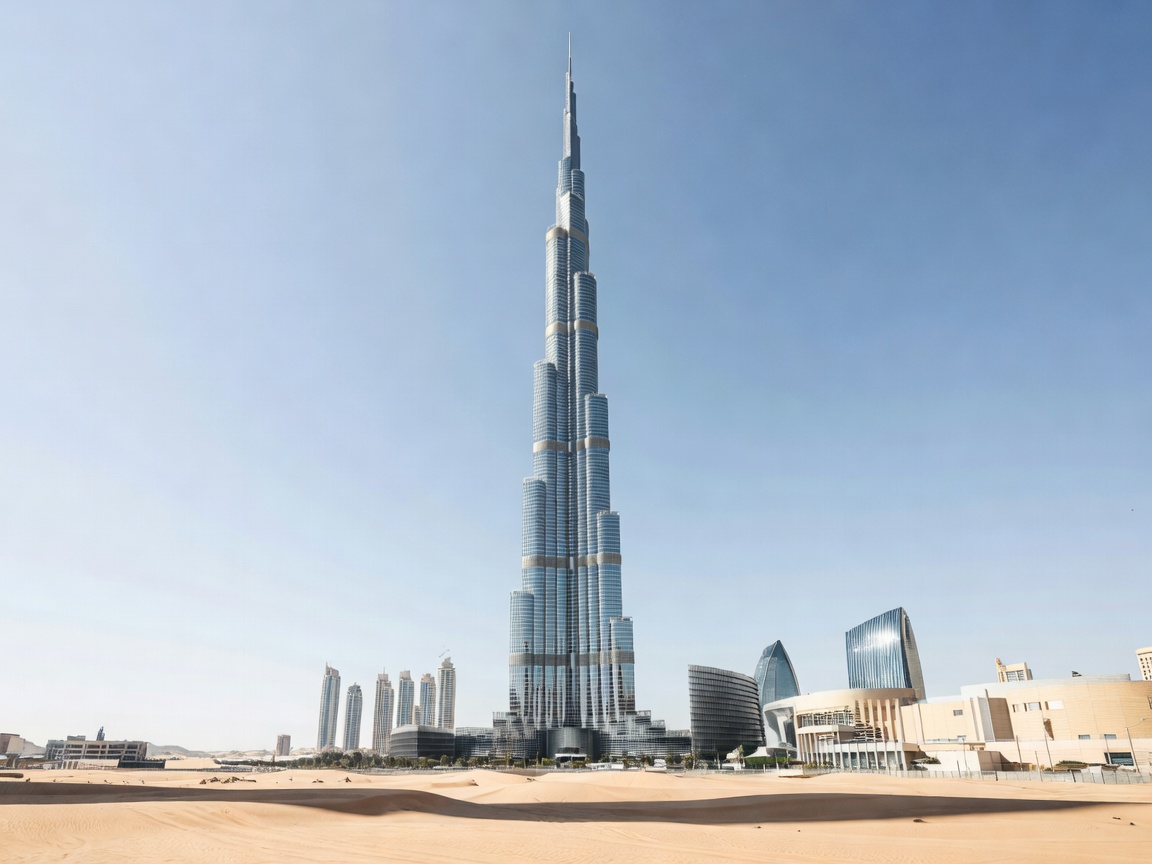
CASE STUDY 3A: Burj Khalifa Buttressed Core Megatall (2010)
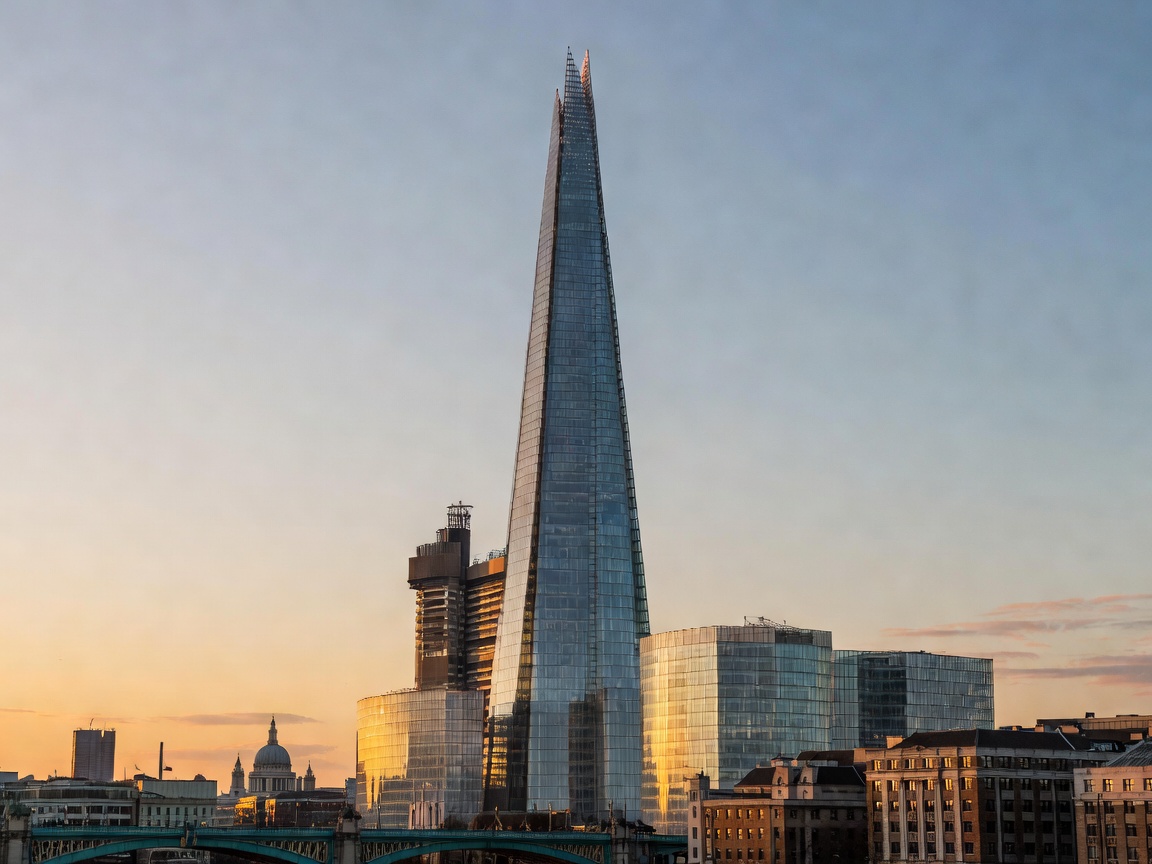
CASE STUDY 3B: The Shard High-Tech Crystalline Spire (2012)
Key Case Studies
Burj Khalifa (UAE), The Shard (UK).
Engineering Breakthroughs
High-strength pumped concrete (C80), tuned mass dampers, stepped vortex shedding geometry.
Bio-Architecture, Parametric Domes & Kinetic Cladding
Modern architectural focus has shifted from pure vertical supremacy to embodied carbon stewardship and micro-climatic performance. Stefano Boeri’s Bosco Verticale demonstrates that biological mass can serve as an active building envelope, absorbing carbon and dampening urban decibel levels.
Concurrently, Jean Nouvel’s Louvre Abu Dhabi utilizes parametric solar filtering. The eight-layered geometric dome produces a microclimate below, cooling the open-air plazas through shadow manipulation and seawater evaporative currents.
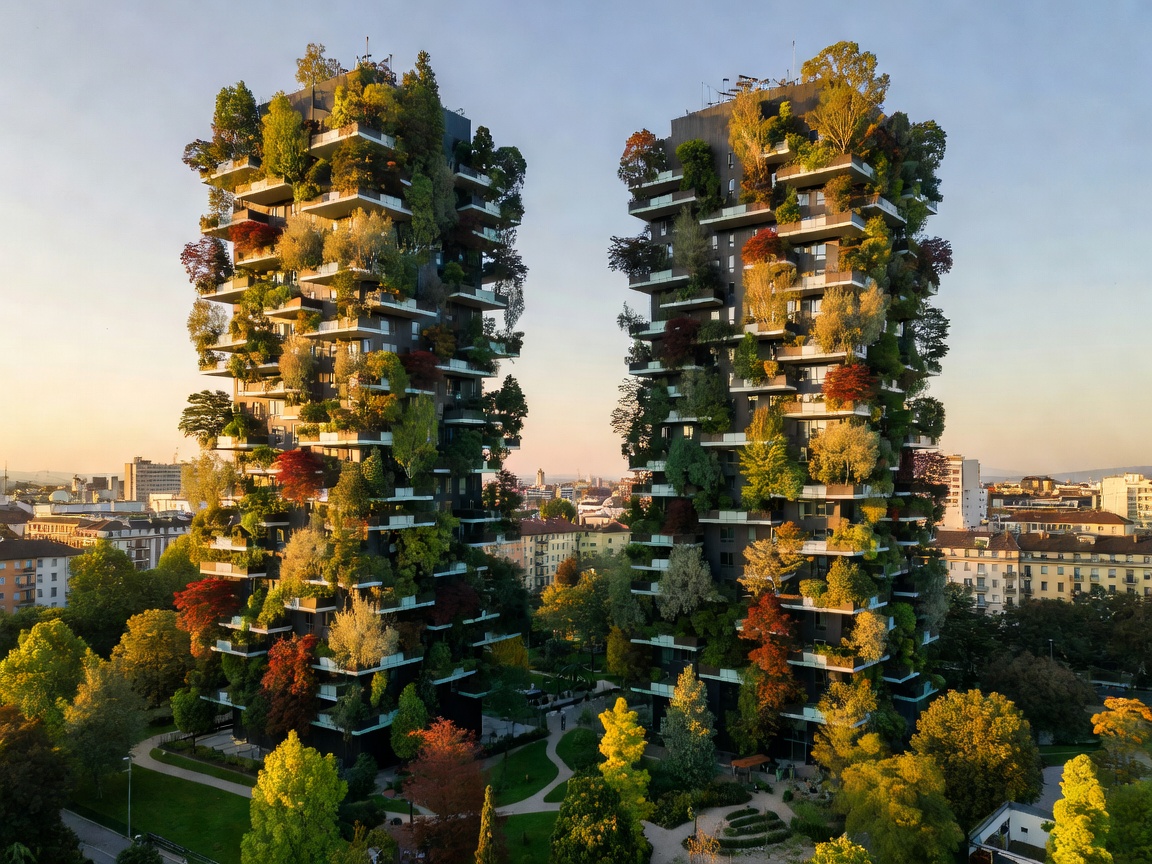
CASE STUDY 4A: Bosco Verticale Biological Envelope (2014)
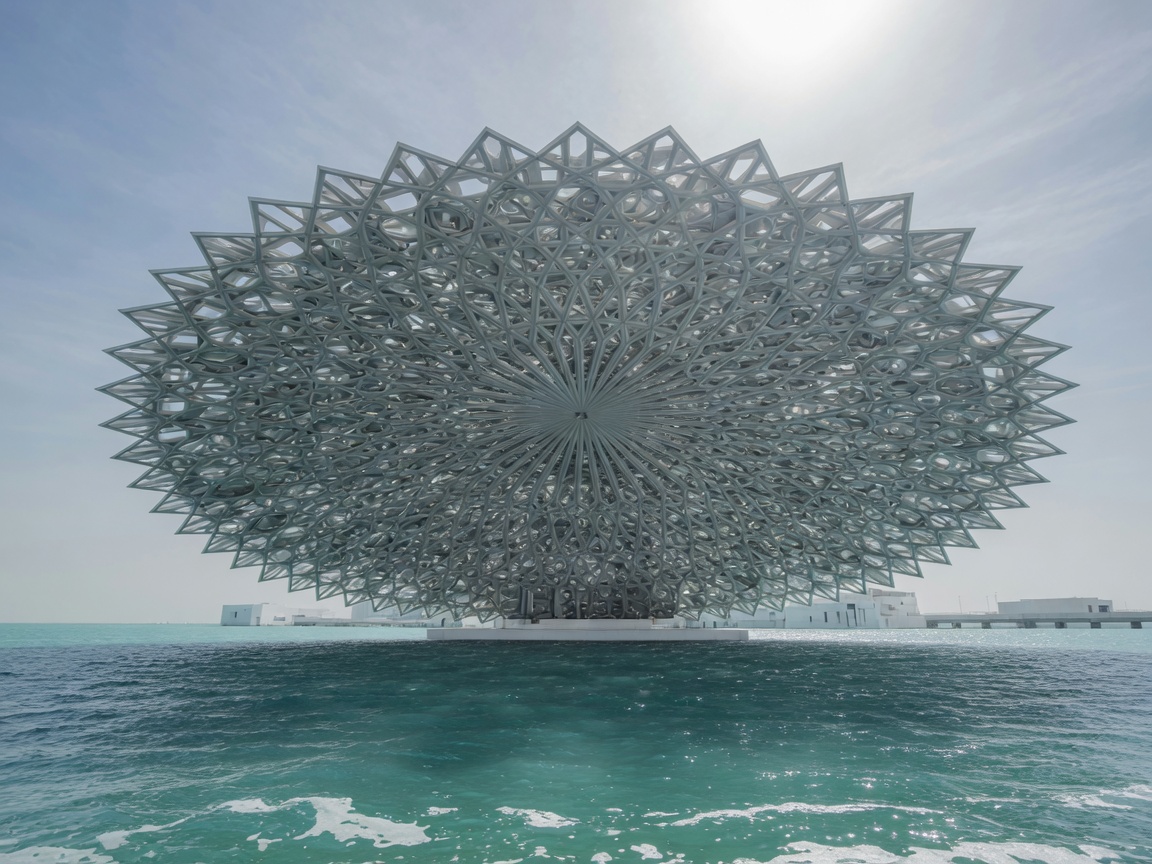
CASE STUDY 4B: Louvre Abu Dhabi Parametric Rain of Light (2017)
Key Case Studies
Bosco Verticale (Italy), Louvre Abu Dhabi (UAE).
Material Drivers
Ultra-high-performance concrete, automated drip irrigation telemetry, low-iron glass.